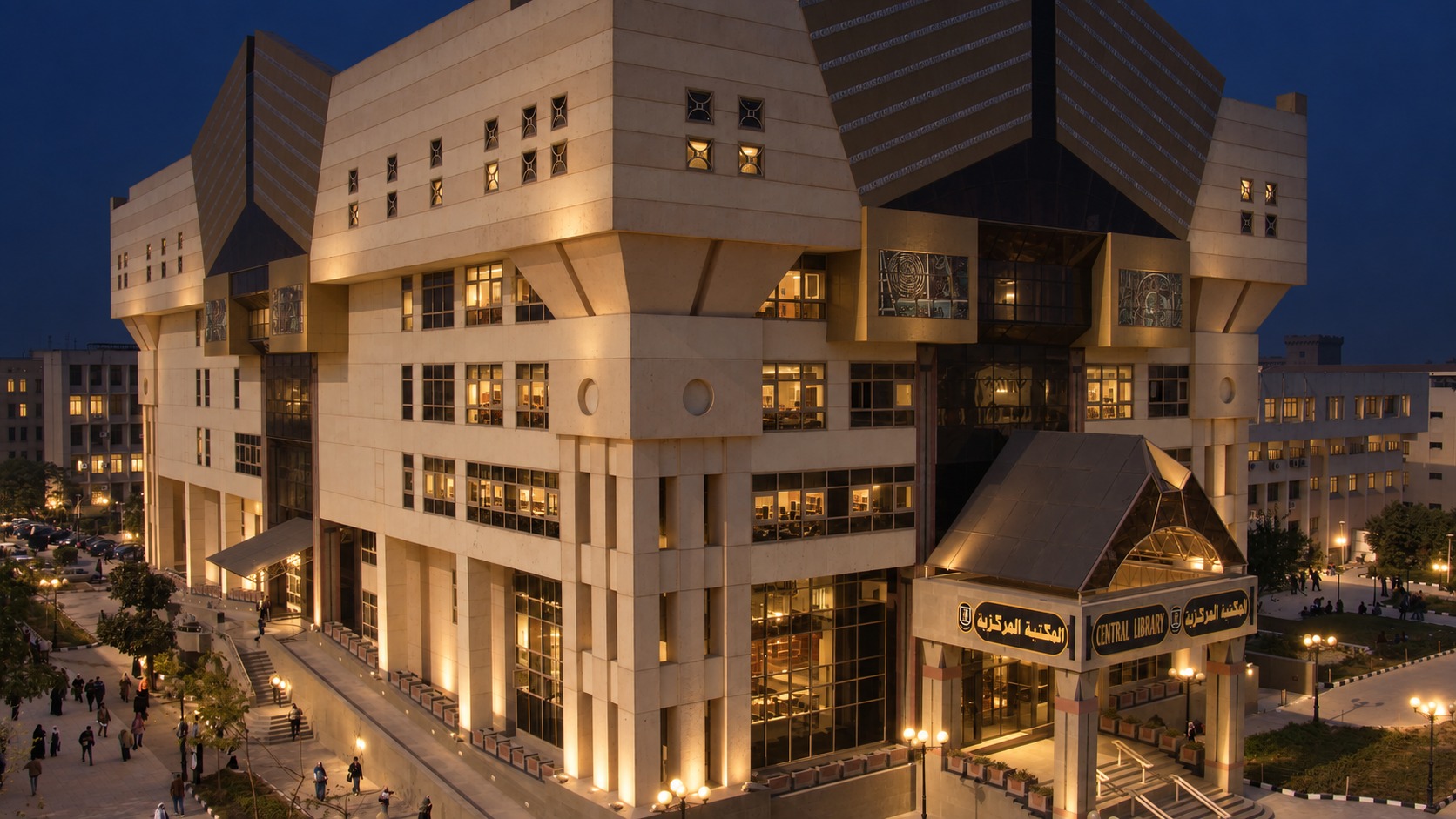
Cairo University's dome is a familiar visual symbol, but the university's real meaning lies behind it: broad disciplines, scientific and humanities traditions, and an environment in which students can move from general knowledge to a precise research question. It is best understood as an academic system, not simply a historical name on a certificate.
More Than a Century of University Development
Founded in 1908, the university has its main campus in Giza and associated teaching and medical facilities elsewhere, notably Kasr Al-Ainy in Cairo. The name “Cairo University” therefore does not mean that every student studies on the campus with the dome. The faculty and programme location should guide accommodation and transport arrangements. [1, 2]
This history adds cultural depth to the experience. Students enter an institution with accumulated traditions of teaching, research and discussion, yet remain responsible for choosing their programme and following its development. History provides context; daily learning is built through communication with teachers, serious engagement with courses and use of available libraries, activities and resources.
Breadth That Reveals the Wider Picture
The university's scope includes medicine, engineering, science, economics and political science, media, law, arts and archaeology, alongside other health and applied fields. This variety helps students consider the relationship between their discipline and society: engineering affects cities, law organises institutions, and media shapes how knowledge reaches the public. [1]
Students need not study all these fields, but can understand what their own subject contributes to the wider system. A worthwhile graduation project can begin with a clear everyday problem and draw on several ways of thinking. Seminars and relevant reading therefore matter alongside examination requirements.
Kasr Al-Ainy and the Clinical Dimension
Kasr Al-Ainy Faculty of Medicine and its teaching hospitals give the university a clear institutional medical identity. For prospective medical students, this is not merely another entry in a faculty list, but a way to understand the relationship between scientific study and hospital training. [1]
Useful comparison begins with the curriculum: how are basic sciences and skills organised, what are the clinical and internship requirements, and how are supervision and assessment conducted? Educational experience should not be reduced to hospital size. What matters is what students can do under supervision and how clinical exposure becomes organised, safe learning.
Research Begins with the Right Question
A comprehensive university helps postgraduate students consider their topic within a varied academic community. At master's and doctoral level, choosing a supervisor, research group, resources and methodology becomes more important than the broad subject title. Applicants can begin by reading recent departmental research and identifying a specific, feasible contribution.
Undergraduates can develop research readiness through documentation, source evaluation, clear report writing and an understanding of the limits of results. These skills support employment and postgraduate study even without a long academic career. The range of surrounding disciplines offers several opportunities to discover a question that genuinely interests them.
Giza and Cairo as Spaces for Knowledge
The university's Greater Cairo setting adds varied cultural possibilities, from museums and historic architecture to arts and public events. Students can set aside balanced time to explore this context, distinguishing city landmarks from university facilities. Being in the same city does not guarantee convenient access at every time.
Accommodation should be chosen around the faculty timetable and transport rather than neighbourhood name alone. University residences exist, but international eligibility and availability require separate confirmation. Teaching language also varies between faculties and programmes, so students should read the regulations for their chosen pathway rather than rely on university-wide generalisations. [1]
Why Include It in a Comparison?
Cairo University offers a meaningful option for students seeking a broad institution, an established teaching and research environment, and the opportunity to specialise within a particular faculty. Its value becomes clearer when academic interests are matched with admission conditions, language, cost and professional recognition. A prominent name then becomes a clear, personal learning plan.
Sources and references
- Source 1 · www.cu.edu.eg
Original source title
ملف UNIVEX المرجعي المؤسسي - Source 2 · cu.edu.eg
Original source title
الموقع الرسمي — التعريف والقطاعات