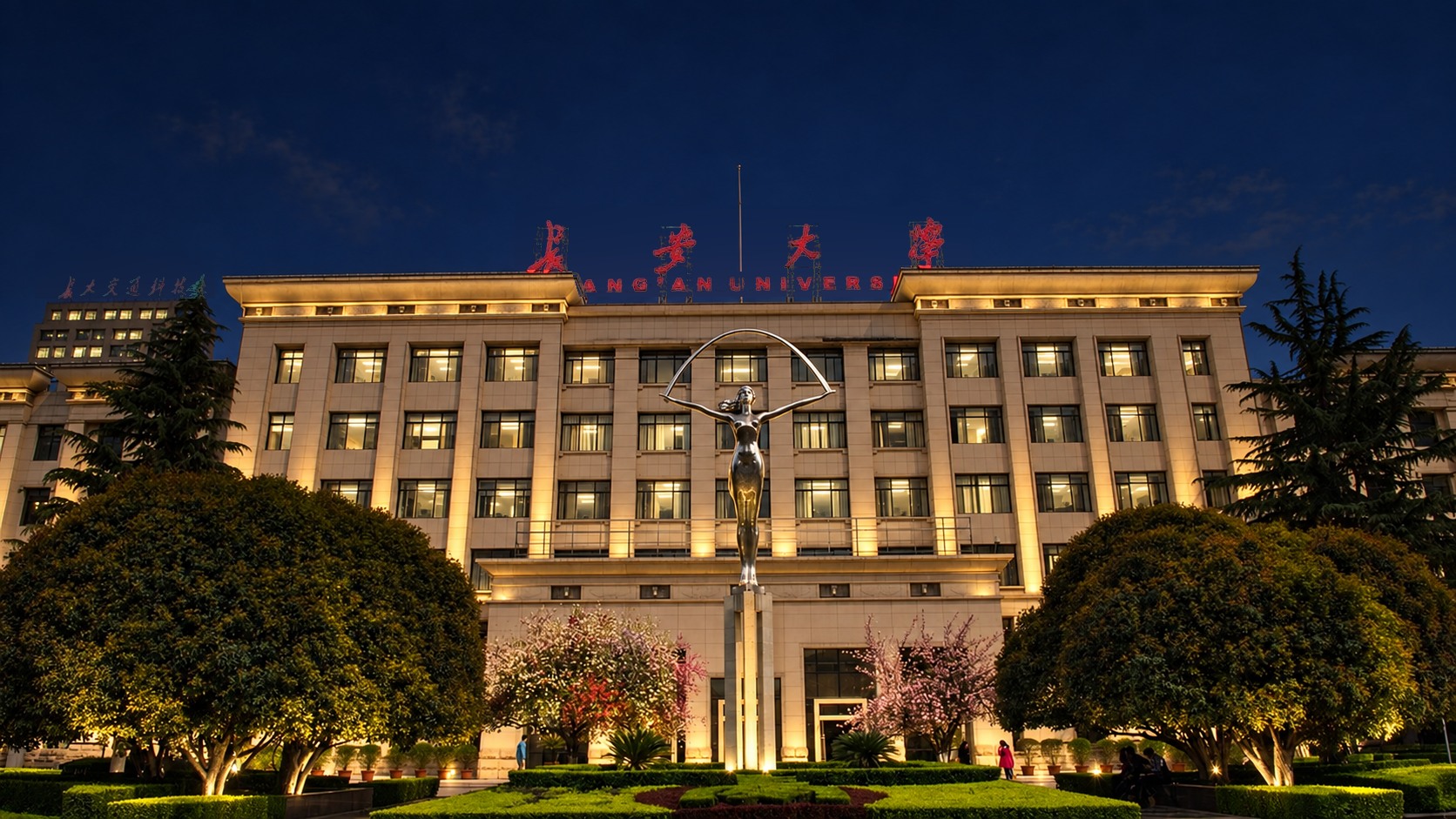
A road is more than a surface carrying vehicles: it involves materials, soil, design, movement, safety and the environment. This idea introduces Chang'an University in Xi'an, where engineering education is connected to transport, earth resources and construction. It gives the university a more specific identity than a technical institution described only in general terms. [1]
A Recently Combined Institution with Earlier Expertise
The university took its merged form in 2000, bringing together Xi'an Highway University, Xi'an Engineering Institute and the Northwest Institute of Construction Engineering. Its constituent roots extend to the early 1950s, with 1951 recorded in the institutional profile. [1]
This background explains the meeting of three questions: how do we move, on what ground do we build, and how do we design structures that fulfil their purpose? Understanding these connections helps students identify a pathway in infrastructure, earth sciences or transport-related systems.
From a Specialism to the Wider Picture
The academic profile describes an engineering-centred university with science, economics, management and humanities fields. It identifies experimental and testing facilities, including a vehicle testing ground, and academic journals in transport, construction, earth sciences and the environment. [1]
These fields provide an engaging way to read a city. A bridge is not solely a structural subject; roads interact with water, soil and population movement; and vehicles belong to wider systems. Students can practise mapping these relationships before moving into detailed calculations.
This does not mean that every programme covers all these subjects. Students choose a clear disciplinary foundation, then use neighbouring fields to understand the effects of their decisions. Connecting ideas makes an engineering project open to discussion and development rather than an exercise isolated from practice.
What Does Measurement-Based Learning Look Like?
In infrastructure-related disciplines, sound knowledge begins by identifying what can be measured and what must be assumed. A project might compare materials, analyse traffic, examine spatial data or assess a design option. Educational value depends less on project size than on a clear method and accurate documentation.
Students can build portfolios of short reports explaining the problem, data, result and limitations. Teamwork develops responsibility allocation and review of colleagues' inputs, since a small error in a shared assumption can change the interpretation of the entire project. These are general engineering skills, not promises of a particular course.
Xi'an: A Setting That Adds Meaning to the Built Environment
Chang'an is located in historic Xi'an, and its profile describes teaching sites and a practical training base. [1] This context allows students to consider the relationship between the older city, urban expansion, movement and services without turning an academic profile into a tourism itinerary.
Observation can begin with everyday details: pavement use, junction organisation and the relationship between buildings and pedestrians. Recording these thoughtfully makes the city a subject for engineering and design reflection, while respecting safety rules and obtaining permission for field measurements where required.
A Choice with a Clear Subject Focus
Chang'an deserves attention from students interested in infrastructure, transport, construction and earth sciences. It illustrates a university whose identity emerges from the combination of institutions with specialist experience, not programme-list breadth alone.
Before applying, confirm the curriculum, language, campus and international entry requirements directly. Agreements and testing facilities should not be converted into guarantees of particular placements. The central question remains whether the programme provides the tools students want for understanding and improving land, roads and cities.
Sources and references
- Source 1 · www.shanghairanking.com
Original source title
التاريخ والهوية الأكاديمية المنشوران لدى ShanghaiRanking - Source 2 · en.chd.edu.cn
Original source title
ملف UNIVEX المرجعي المؤسسي