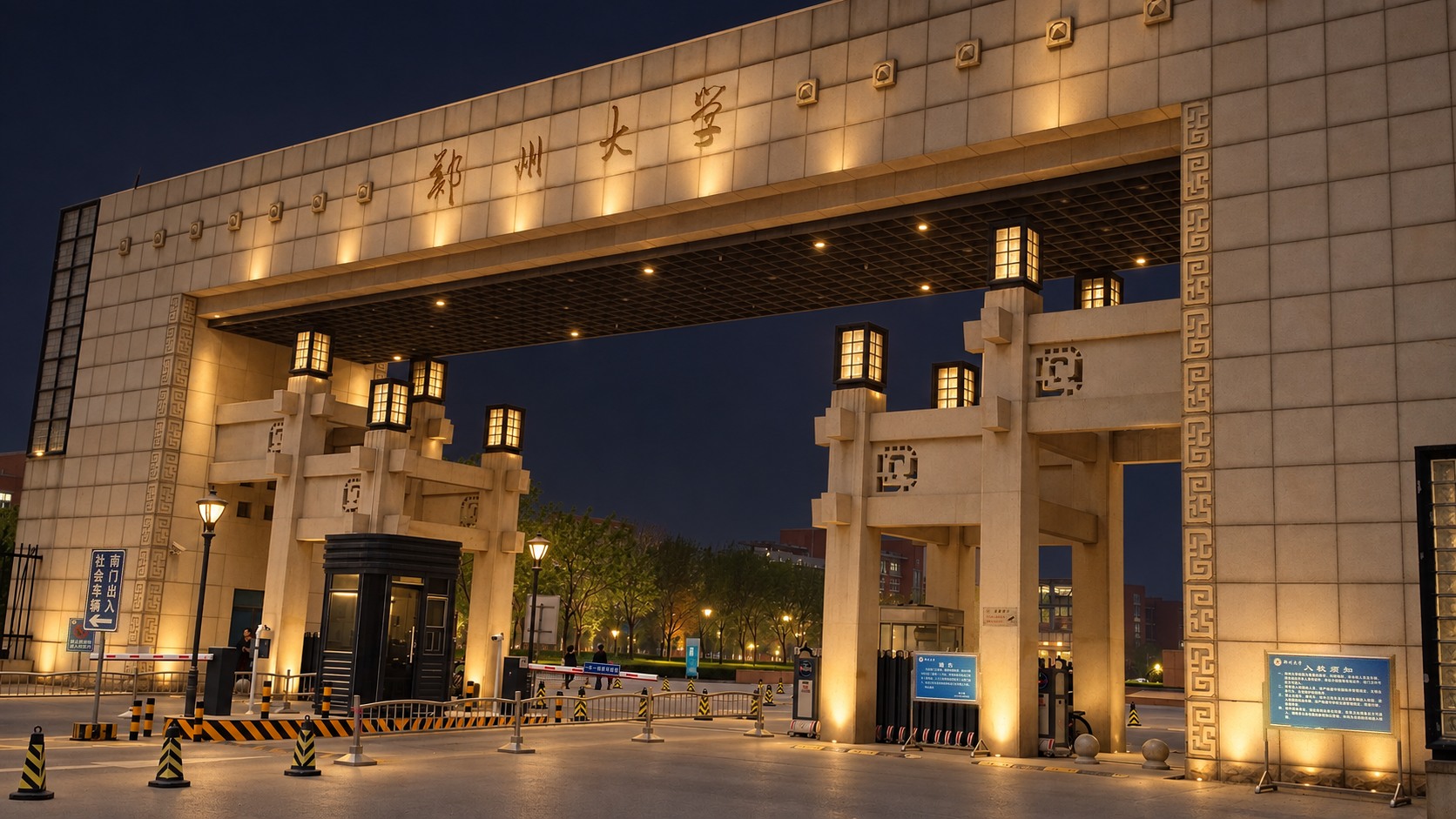
A comprehensive university offers students multiple perspectives on a single question. At Zhengzhou University in Henan Province, China, medical education, science, engineering, and the humanities converge within a broadly oriented institution. This structured approach makes the university conducive to structured exploration, particularly for those seeking a specific area of study within a diverse academic environment. [1, 2]
The Merger that Shaped the Current University
The current university was formed in July 2000 through the merger of the former Zhengzhou University, Henan Medical University, and Zhengzhou University of Technology. The QS Institutional Page states that the former comprehensive university was founded in 1956. Therefore, it is important to distinguish between the age of one component and the history of the merged institution, rather than simply listing a single year without explanation. [2]
This composite origin helps explain its breadth: a tradition of general education, a medical foundation, and technical expertise. From an academic perspective, this framework allows for reflection on the connections between health, materials, data, and administration, while each program remains tailored to its specific requirements.
Medicine as Part of a Broader Scientific System
The website features sections for medicine, science, and humanities, alongside research, international education, and the library. Its news highlights studies in public health, cancer research, and physics, reflecting the diversity of research questions within the institution. [1]
For medical students, this picture offers an important insight: understanding disease is not a separate field from statistics, chemistry, behavior, and health services. They can develop their thinking by reading a simple study, understanding its question and design, and what its results allow them to conclude. They don't need to start with a monumental discovery; a good starting point is distinguishing between strong evidence and an inference that goes beyond the data.
Science or engineering students can use health problems as a source of questions without claiming their program is medical. A project might involve analyzing data or the properties of a material, or designing a process, and its value lies in the clarity of the problem and methodology, not in the grandeur of its title.
How can students benefit from this breadth?
The abundance of options may seem tempting, but making the most of them requires a strategic approach. Students begin by identifying the department they will be pursuing their degree in, then review the core and elective courses and familiarize themselves with the faculty's areas of expertise. Afterward, they look for an activity or project that adds a new dimension to their specialization.
The library, for example, is not just a place to review before exams. This can be transformed into a starting point for a weekly habit: reading a source, writing down a question, and comparing two interpretations. Over time, students become more capable of choosing a research topic or discussing their project in precise academic language.
City, Campus, and Daily Routine
The university is affiliated with Zhengzhou, and institutional profiles describe a multi-site structure. [2, 3] Therefore, identifying the specific campus and department is more important than relying on a general university address, especially since medical and teaching activities are spread across different locations.
A simple daily plan helps with settling in: a clear route between accommodation and study, time for individual study, and space for social activities. Learning practical Mandarin adds the ability to navigate the nuances of local life, regardless of the program language, which should be checked separately.
Choosing Based on Program, Not University Size
Zhengzhou seems worthwhile for those seeking a comprehensive university, wanting to study medicine within a multidisciplinary research environment, or preferring to see their specialization in relation to other sciences. The best way to compare is to move from this general impression to the program guide itself.
The language of instruction, training, location, fees, and requirements for international students are reviewed according to the year of application. For professional tracks, the required accreditation in the country of practice is examined independently. Thus, the strength of the article lies in introducing the reader to the university's identity and fields of study, without confusing the breadth of the institution with ensuring the suitability of each program for every student.
Sources and references
- Source 1 · english.zzu.edu.cn
Original source title
جامعة تشنغتشو: الأكاديميات والبحث - Source 2 · www.topuniversities.com
Original source title
الملف المؤسسي المنشور لدى QS - Source 3 · www.shanghairanking.com
Original source title
الملف المؤسسي لدى ShanghaiRanking