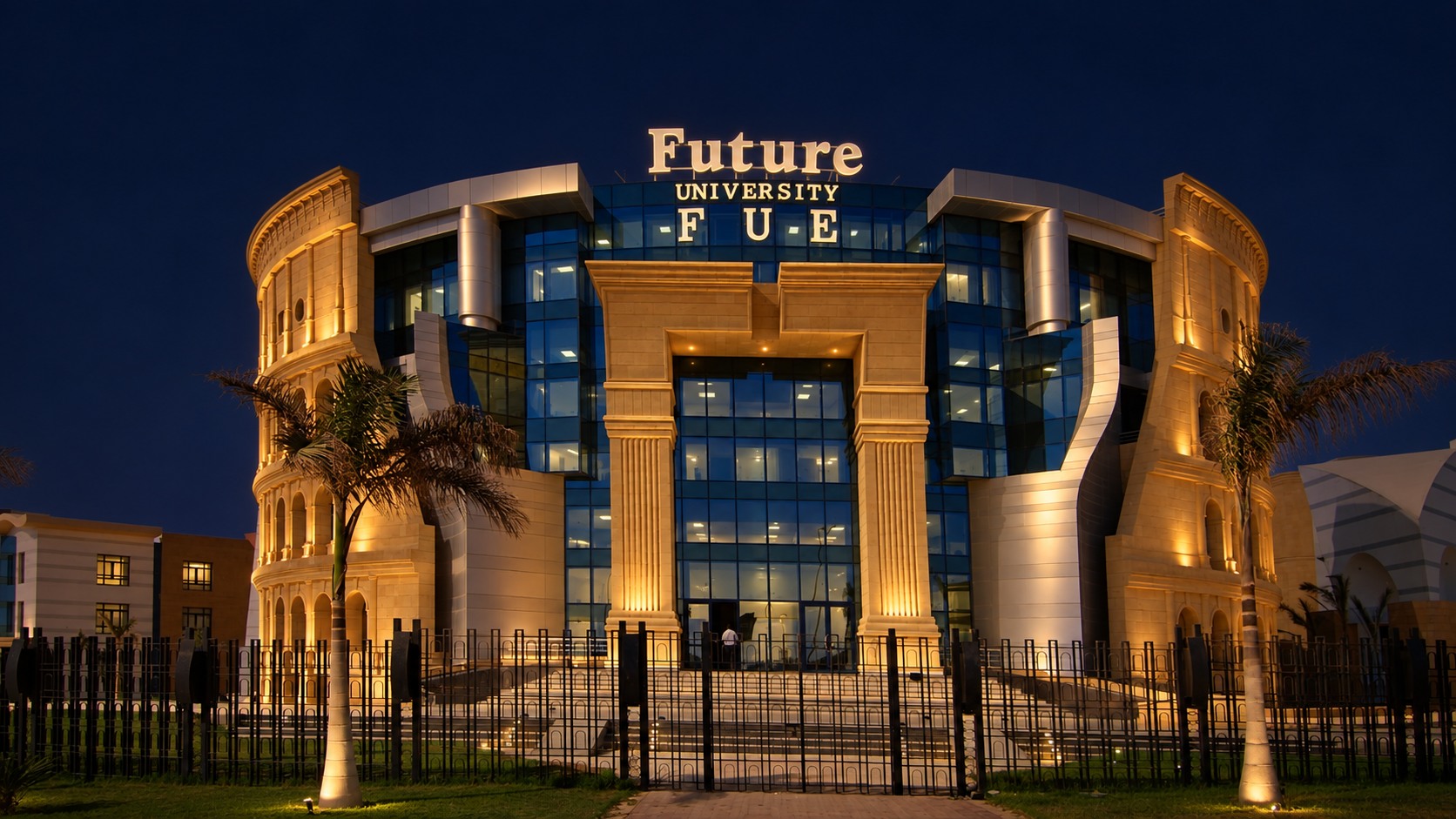

Some facilities give a university a character that cannot be captured in a faculty list. At Future University in Egypt, a teaching dental hospital and pharmaceutical training factory stand alongside engineering, computing and business. These elements invite an applied reading of the institution: how does knowledge move from the textbook into an environment resembling the work students are preparing to undertake?
A Modern Beginning and a Multidisciplinary Identity
Future University began in 2006 and is located in New Cairo at the end of 90th Street. Its scope includes oral and dental medicine, pharmacy, engineering and technology, computers and information technology, commerce and business administration, and economics and political science. [1, 2]
This breadth does not mean that all programmes use one approach. Professional skills and supervision are central in health pathways, projects and testing in computing, and case studies and analysis in business. Each programme should therefore be read as a distinct experience within an institution that brings neighbouring disciplines together.
The Dental Hospital: Learning Connected to Responsibility
The website presents a dental hospital among the university's facilities. The educational value of such an environment lies in connecting basic sciences with diagnosis, treatment planning and patient communication, with skills developed progressively under supervision. [2]
Students should explore how training is distributed between simulation and clinical work, how competence is assessed, and what must be completed before working with patients. These details explain the experience more clearly than equipment counts alone. Infection prevention, documentation and respect for patient privacy are integral to professional preparation, not separate from manual skill.
An Educational Factory for Pharmaceutical Manufacturing
Another specific feature is the Future Factory for Industrial Training, described by the university as an educational pharmaceutical factory. It introduces a different perspective for pharmacy students: medicines reach patients through manufacturing, quality control and documentation, not simply as chemical formulas. [2]
This helps distinguish interests in clinical pharmacy from those in industry or pharmaceutical research. Students can ask which courses use the facility, what tasks they undertake and how training connects with a project or assessment. A factory does not guarantee an external placement or job; the advantage is the organised learning actually provided by the programme.
Technology and Business in an Applied Context
Engineering and computing provide scope for models, software and solution testing, while business administration and economics help students understand organisations, markets and decisions. Together, these fields suggest several ways to assess a project: does it work technically, does it meet a need, and how is it managed? [1, 2]
Benefiting from these connections requires student initiative. A strong graduation project starts with a clear question, identifies what will be measured and tested, and presents results and limitations. Team participation can teach responsibility allocation and communication across disciplines, offering an experience different from individual assignments.
Student Support and Academic Communication
The university presents an international student support centre, career counselling, a library, an English-language centre and services connected with student life, mental health and personal development. Identifying these offices early helps students obtain information directly rather than relying on circulating informal answers. [2]
The university's history also includes academic cooperation with institutions outside Egypt. Each agreement should be read according to its subject, date and included programme: cooperation on a conference or course development does not automatically mean a joint degree. This distinction preserves the real value of cooperation and keeps expectations specific.
An Experience Best Understood Practically
Future University deserves attention from students who prefer applied learning, especially when comparing one of its health, technical or administrative pathways. A useful comparison includes visiting the faculty or examining the training plan and course outcomes, then reviewing accommodation, transport, fees and professional recognition for the intended programme. The strongest choice is one in which students can explain what they will learn, not merely express admiration for a campus photograph.
Sources and references
- Source 1 · www.fue.edu.eg
Original source title
ملف UNIVEX المرجعي المؤسسي - Source 2 · www.fue.edu.eg
Original source title
الموقع الرسمي للجامعة