In the history of medical education, institutions whose character can be understood from their starting point are exemplified by the First Pavlov State Medical University in Saint Petersburg. It began in 1897 as a medical institute for women before evolving into an institution integrating teaching, research, and clinical practice. This beginning gives its profile a dimension that transcends a printed date next to its name: it is part of the story of expanding access to medical studies. [1]
A Name Associated with Physiology
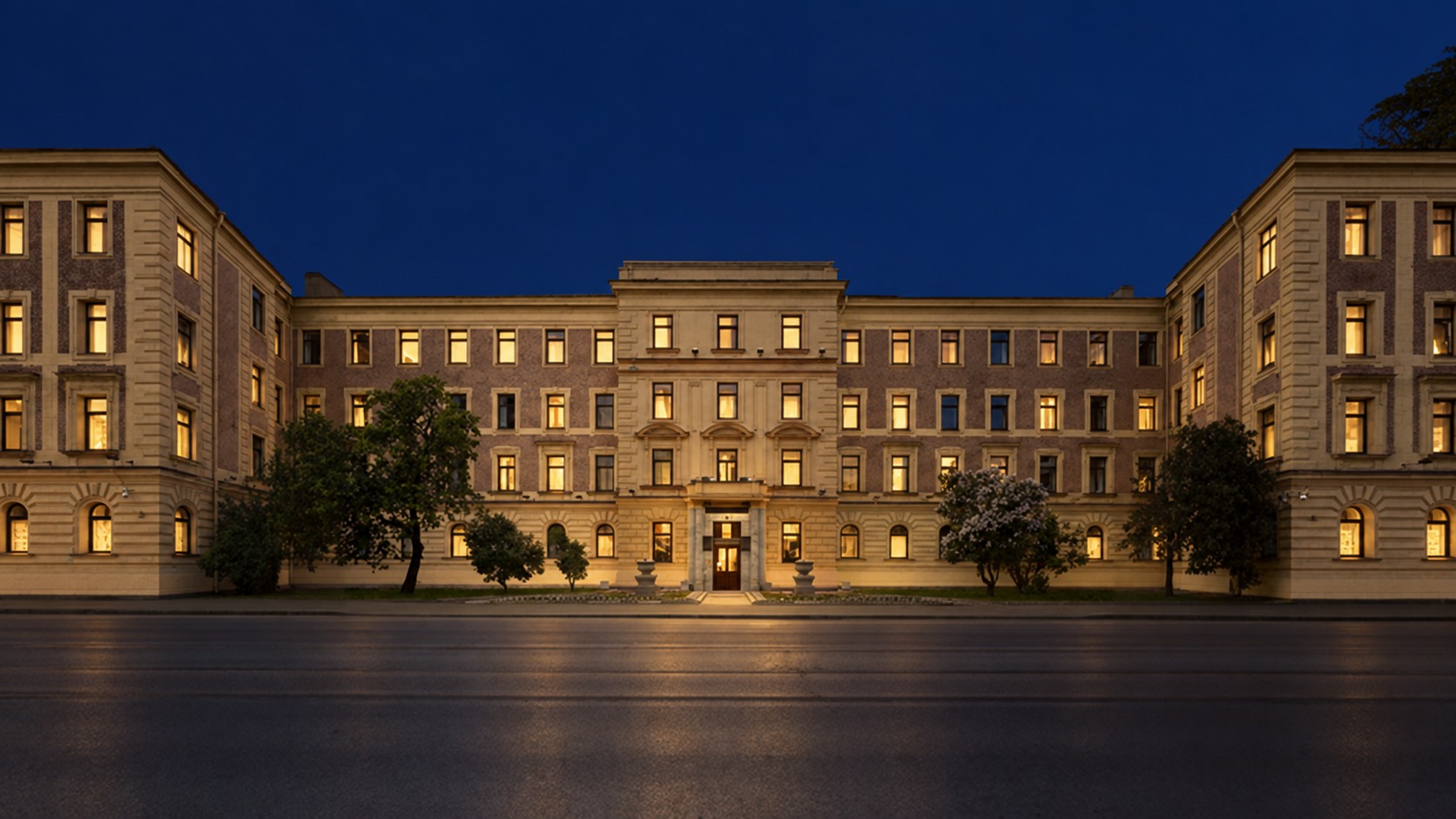
The institution has borne the name of Ivan Pavlov since 1936, and the word "First" was reinstated in its official name in 2013. Its main campus is located on Lev Tolstogo Street, in the Petrograd region of Saint Petersburg. [1]
It is important not to confuse it with the Ryazan State Medical University, which also bears the name Pavlov. Sharing the same academic name does not make the two institutions branches of the same university. When reading academic documents, the full name, city, and program should be clearly indicated to ensure a clear distinction from the outset.
The Hospital as Part of the Identity
The university profile is linked to a teaching hospital and diagnostic and treatment units, and its website presents separate pathways for education, research, and clinical services. This structure makes the relationship between the study of human beings and patient care a suitable entry point for understanding the institution. [1, 2]
In medical education, observing a case is not the end goal. Educational value emerges when the student can connect symptoms to what they have learned in anatomy and physiology, and then understand the reason for the examination and follow-up plan. This should be within a clear role and appropriate supervision, respecting patient confidentiality, consent, and dignity.
General Medicine and Related Fields
The university's academic profile documents general medicine, but also includes dentistry, pediatrics, clinical psychology, nursing, and adaptive physical education. These are distinct fields, and the university's listing does not imply that all of them are open in every course to international students or in the same language. [1]
Students benefit from this diversity when they understand the different healthcare roles. Pediatrics is not limited to the smallest size of the human body, clinical psychology has its own tools and qualifications, and nursing is a profession with its own independence and responsibilities. This comparison helps him identify the field that best suits his true interests, rather than choosing a title that sounds similar to medicine without understanding its nature.
Language in the Classroom and with Patients
Reference sources include a general medicine track that uses English, while Russian remains essential in the local environment and for clinical communication. The current language requirements for each stage of university study are taken from the university's curriculum, not from a general advertisement. [1]
Students can make learning Russian a gradual part of their professional preparation: understanding instructions, communicating respectfully, asking patients about their complaints, and then developing medical vocabulary under supervision. They don't need to start with complete fluency, but having an early plan is more beneficial than postponing learning until their first day in the hospital.
A City That Adds Space for Learning
Choosing St. Petersburg means university life takes place in a city with a strong cultural and artistic presence. A student's practical experience begins with the location of the college, their accommodation, and their daily commute, then expands to include reading, activities, and cultural visits according to their time and budget. Every day doesn't have to be hectic; sometimes, a consistent schedule of studies, sleep, and social interactions creates a richer experience than frequent commuting.
Institutional resources offer student housing, but the type, allocation, and location of the room are reviewed upon admission. Students can compare options based on commuting time to training sites, not just proximity to the administration building. [1]
How to Recognize a University's Advantage?
Pavlov's primary appeal lies in the intersection of a long medical history with a specialized therapeutic and educational structure. This appreciation is complemented by a review of the curriculum, language of instruction, supervision, and the validity of the qualification in the country of practice. In this context, history becomes a framework for understanding the study experience, not a substitute for knowing what the student will actually learn.
Sources and references
- Source 1 · www.1spbgmu.ru
Original source title
ملف UNIVEX المرجعي المؤسسي - Source 2 · www.1spbgmu.ru
Original source title
الموقع الرسمي للجامعة