Choosing a university might begin with a specific major, but university life becomes richer when that major is surrounded by diverse perspectives. This is what makes the University of Georgia in Tbilisi a worthwhile read: an institution that originated in the social sciences and then expanded into health, technology, and management fields. We are referring here to the private Georgian university, not the American university with the same English name.
An Introduction to the Institution's Character
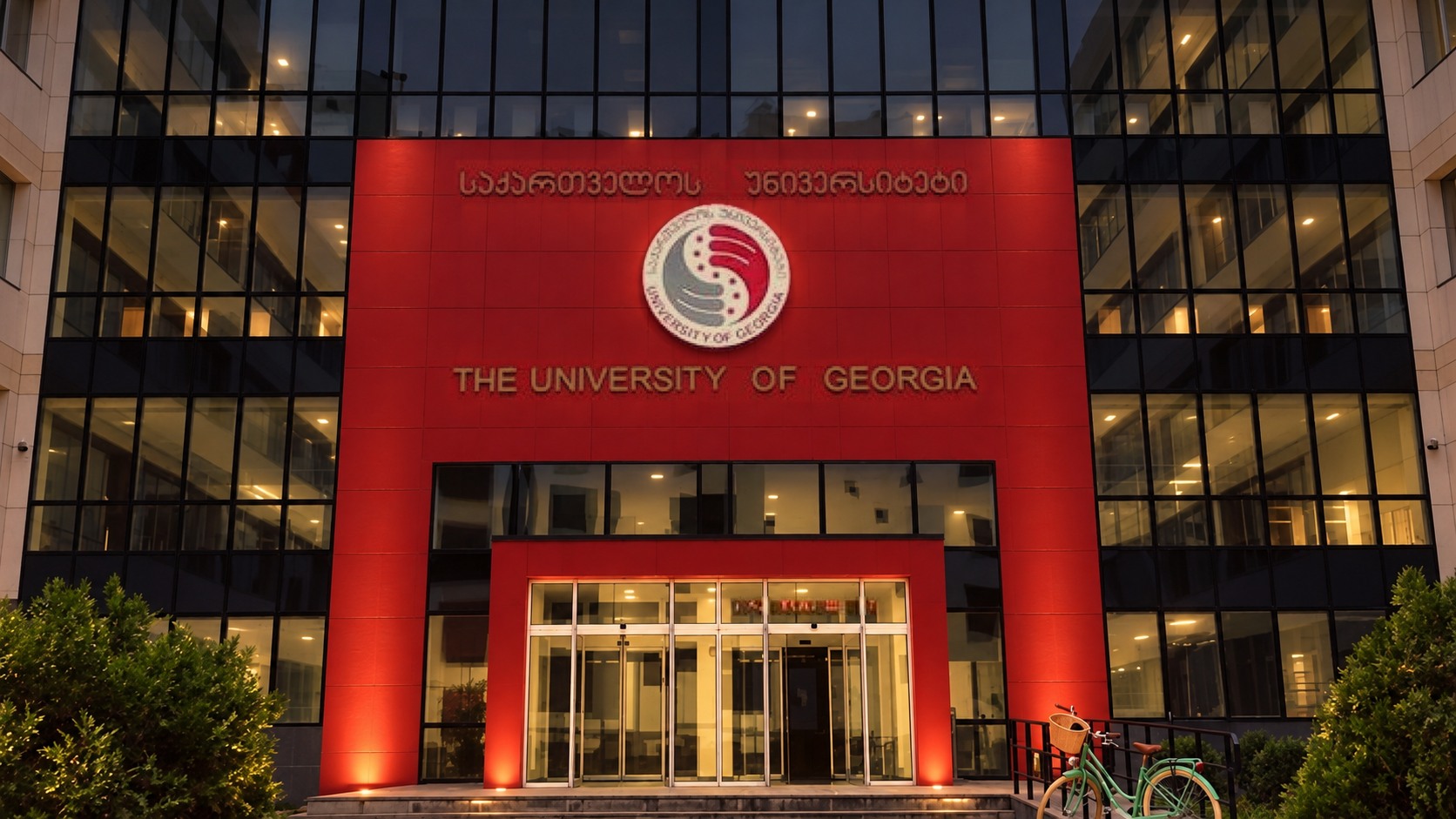
The institution was founded in 2004 and has been known as the University of Georgia since 2007, according to its institutional archives. Its campus is located on Merab Kostava Street in Tbilisi. Understanding this trajectory helps to see the university as a multidisciplinary project, not simply a name for an international medical program. [1]
Starting with the social sciences highlights the value of communication and understanding society and institutions. As the university expands into health and technology, it becomes beneficial for students to explore where this heritage intersects with their chosen field: professional ethics, community service, user needs analysis, or interpreting the impact of administrative decisions. These are points of academic comparison, not an assertion that every program includes the same courses.
A Space for the Health and Digital Student
The reference guide lists English-language programs in medicine, dentistry, computer science, and business administration, with tracks related to informatics and artificial intelligence. This breadth allows for a multi-faceted perspective: medical students focus on the curriculum and clinical training, while technology students are interested in labs, projects, and programming content. [1]
In the digital field, it is important to distinguish between a broad marketing term and the degree itself, as reflected in the plan and certificate. Artificial intelligence topics may be offered within an informatics or computer science program, not necessarily as a separate degree with the same name. A more accurate comparison focuses on mathematics, data, algorithms, and the final project, as these elements reveal the true depth of the qualification.
How to Read a Health Study?
The university's health-related offerings are linked to medicine and dentistry programs. For students choosing one of these fields, the learning journey is more important than the degree title: How are the fundamental sciences built? When does application begin? What is the nature of supervision and assessment? These questions help to visualize the study realistically and professionally. [1]
In dentistry specifically, it is important to differentiate between simulation, pre-clinical training, and supervised patient care. In medicine, it is beneficial to request a description of the required stages and skills for each year. The eligibility to practice outside Georgia is not inferred from the college's presence in an international directory; rather, the program's requirements must be aligned with those of the target licensing authority before commitment.
The University as a Participating Environment
The archive includes references to clubs, sports activities, and student initiatives. The value of these spaces lies in their ability to help students build relationships and develop practical skills outside of exams: time management, teamwork, idea generation, and shared responsibility. Students can choose an activity related to their major and another that broadens their personal experience, instead of trying to join everything at once. [1]
It is also helpful for students to organize their tools from the first semester: a digital note-taking library, a project log, and a reading and language plan. These are practices that can be implemented at any university, but they become even more beneficial within a multidisciplinary institution where sources of ideas, encounters, and interests abound.
Urban Living with a Cultural Character
Tbilisi is a city that gradually reveals itself; from its ancient urban fabric to its museums, cafes, and pedestrian-friendly spaces. Accommodation that fits within a study schedule allows students to combine academic focus with exploring the city without turning commuting into a daily burden. Images of the capital are not necessarily campus images, and the presence of tourist activity does not guarantee proximity to the college building. [2]
International students benefit from learning the local currency, transportation, and everyday vocabulary, even when their program is taught in English. Accommodation bookings are based on the actual study location, the type of contract, and the services included, not on the assumption of a guaranteed university room as part of admission.
Who deserves to be on your comparison list?
The University of Georgia is a worthwhile option for those seeking an urban institution with a focus spanning health, business, and computing. The best way to take advantage of this diversity is to clearly identify one program, then thoroughly review its curriculum, language of instruction, requirements, and learning outcomes. The university's name then becomes the starting point for a good academic inquiry, not the end goal of the selection process.
Sources and references
- Source 1 · www.ug.edu.ge
Original source title
ملف UNIVEX المرجعي المؤسسي - Source 2 · georgia.travel
Original source title
الهيئة الوطنية الجورجية للسياحة — تبليسي