
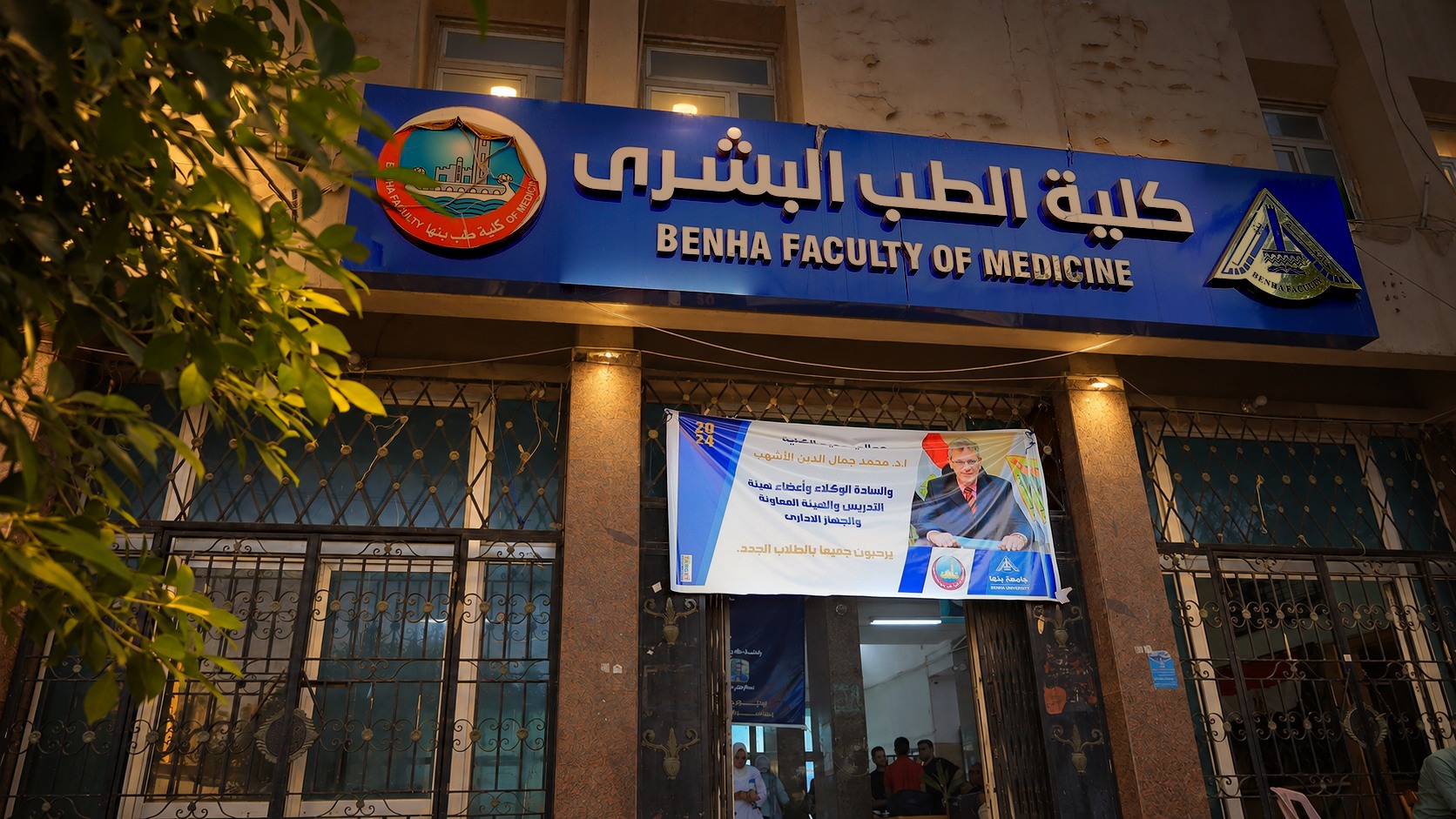

One university can encompass very different learning environments. At Benha University, faculties are distributed between Benha, Shubra, Moshtohor and other sites. It is not a single campus where all students share the same experience. This characteristic creates variety worth understanding and places faculty location among the first practical questions when choosing a programme.
Recent Independence and Earlier Roots
Benha became an independent university in 2005, while its university branch dates to 1976. This history distinguishes the age of the independent institution from the higher education activity that preceded it in the region. [1]
The distinction helps students read each faculty through its own development. An engineering school may have a different history and location from a health or agricultural faculty, although all belong to the same university. Precise comparison therefore takes place between programmes and faculties, not university names alone.
Engineering in Two Academic Locations
The official website presents the Faculty of Engineering at Shubra and the Faculty of Engineering at Benha as separate faculties within the institution. This matters for students seeking a particular engineering department: the programme, location and regulations cannot simply be replaced by the general label “Benha Engineering”. [2]
Exploration can begin with the field of interest—construction, electrical, mechanical or computer-related systems—followed by what the relevant faculty actually provides. Students then examine projects, laboratories, training and learning outcomes. Engineering competence develops through problem-solving, design, testing and documentation, not theoretical lectures alone.
Moshtohor and the Agricultural and Veterinary Dimension
The archive links the Faculty of Agriculture with Moshtohor, and the university also includes veterinary medicine. This range allows questions of production, animal health, food and the environment to be studied from connected perspectives, while professional routes and requirements remain distinct. [1, 2]
The setting may appeal to students who enjoy field or laboratory work and turning observations into results that can be analysed. A topic involving water, product quality or animal health can demonstrate the connection between basic knowledge and application. These subjects should not be assumed to be available in every programme; the specific departments, courses and training must be reviewed.
Health, Computing and the Humanities
The website includes medicine, nursing and physiotherapy; computers and artificial intelligence and science; and applied arts, commerce, law, arts and education. This breadth offers choices between working with people, data and systems, or creative and educational practice. [2]
In digital fields, it is useful to distinguish learning to use a tool from understanding the principles on which it is built. Health disciplines emphasise supervision, communication and professional behaviour. These differences help applicants assess a subject's suitability rather than choosing the most frequently mentioned name without understanding daily study.
Digital Resources That Support Organisation
The website provides access points for the academic catalogue, theses, libraries, the digital library and e-learning. Students can use them to develop an initial map of the university, while researchers can begin exploring departmental topics and research output. [2]
A personal record of courses, requirements, deadlines and official correspondence is also useful. This habit is particularly valuable in an institution with several locations, reducing confusion between administrative offices, training sites and other faculties. Direct communication with the selected faculty remains necessary to confirm programme-specific details.
Spatial Planning Is Part of Success
The archive identifies university accommodation arrangements in different locations, but international eligibility, availability and conditions are not automatically uniform. Choose accommodation after identifying the faculty and training sites, considering actual travel time rather than map distance alone. [1]
Benha University merits comparison for students seeking a broad public university and valuing varied academic schools connected to urban, agricultural and applied environments. Complete the choice by confirming the location, programme, language, fees, training and accreditation. Its advantages become tangible when students know where they will study, what they will learn and how they will use the available resources.
Sources and references
- Source 1 · bu.edu.eg
Original source title
ملف UNIVEX المرجعي المؤسسي - Source 2 · bu.edu.eg
Original source title
الموقع الرسمي — الكليات والخدمات