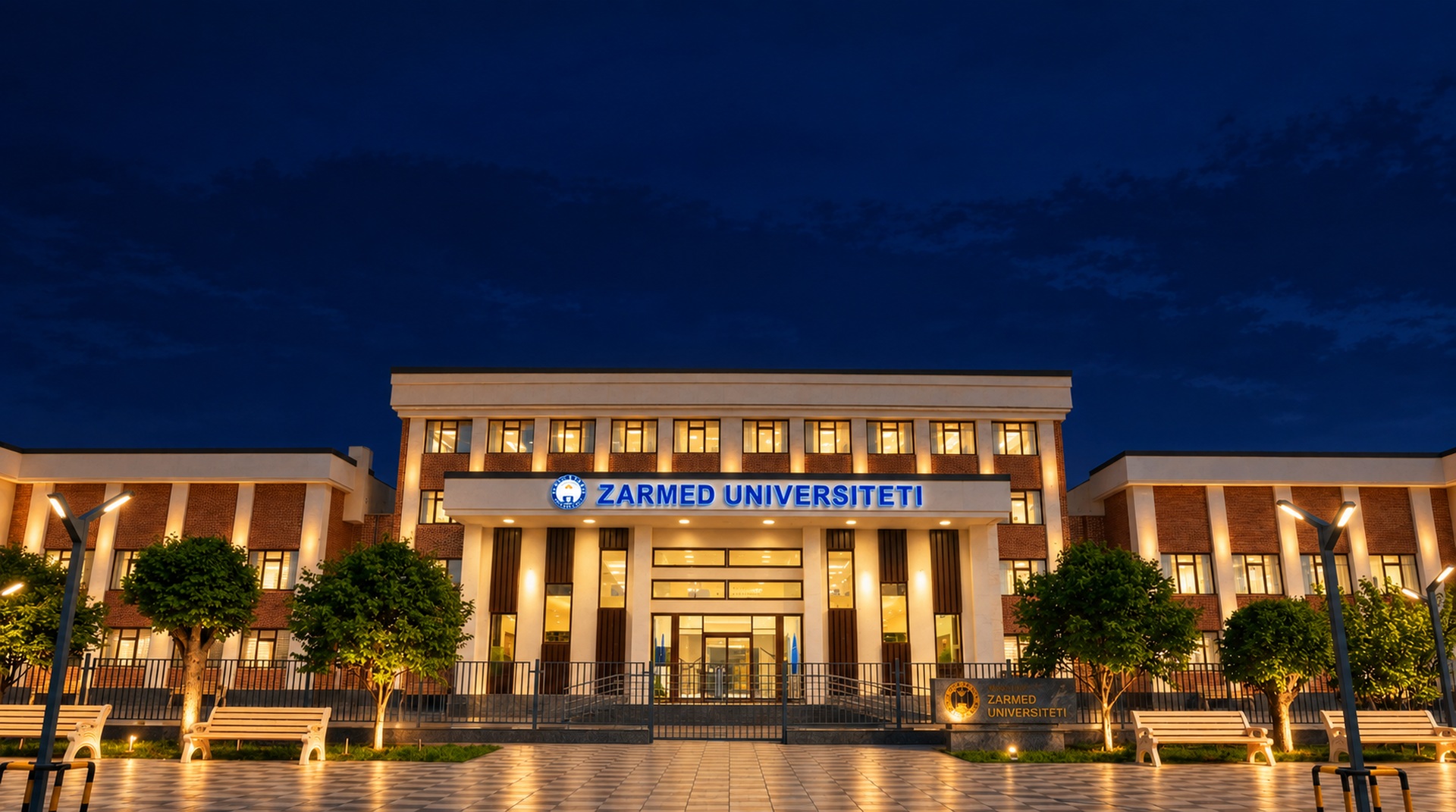
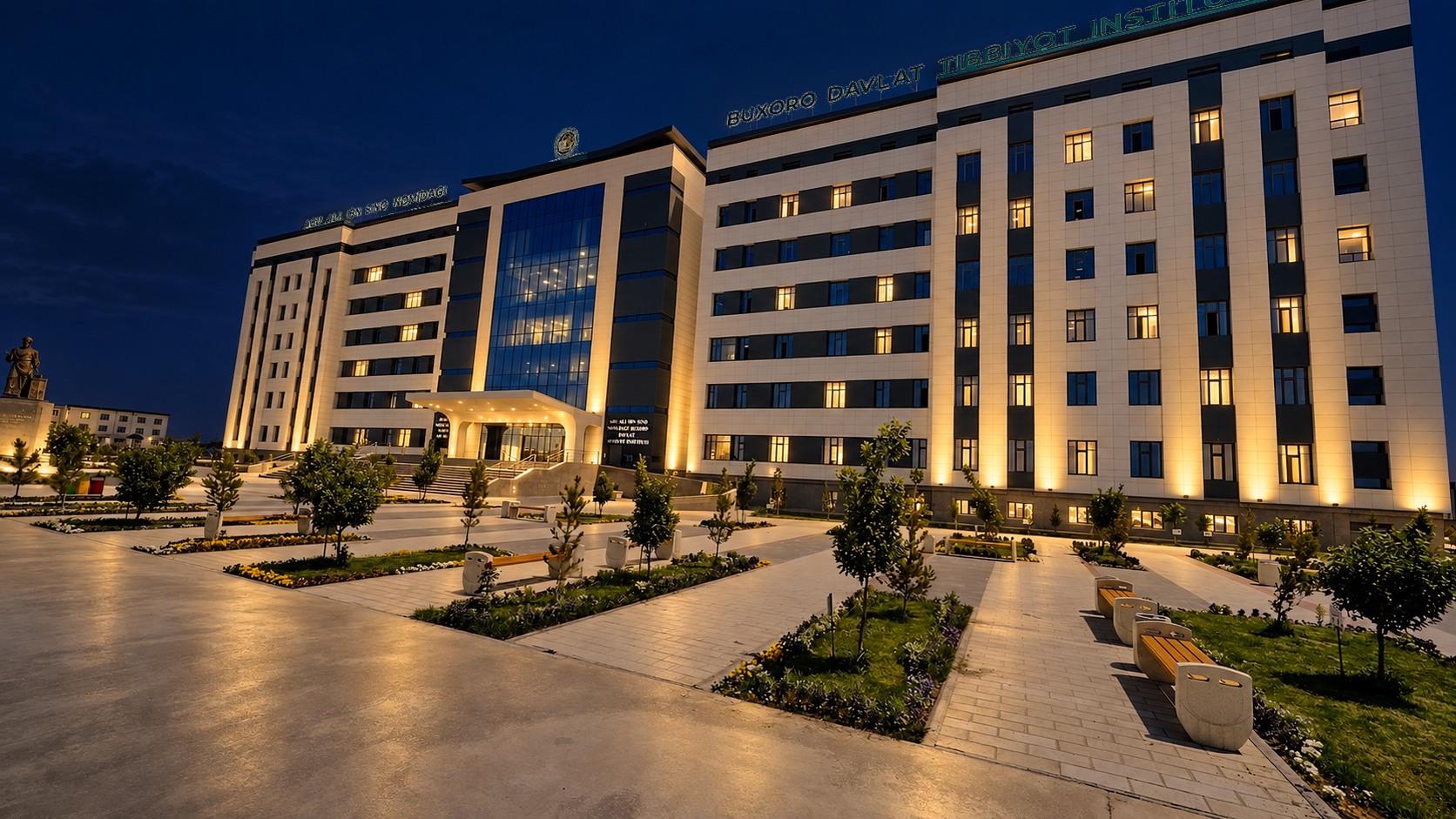

The name of Abu Ali Ibn Sina gives the Bukhara State Medical Institute a symbolic link to the history of medical knowledge, but the institution's definition begins with its actual history: it was founded in October 1990 and named after Ibn Sina in March 1991. This respects the historical significance of the name without attributing to the institute an age derived from its namesake. [1]
A Gradually Expanding Healthcare Pathway
The Faculty of Medicine began in 1991, followed by Dentistry in 1992, and subsequent expansions into Nursing, Medical Education, Pediatrics, and other fields. The information page lists fields including General Medicine, Dentistry, Pharmacy, Nursing, Preventive Medicine, and Biomedical Sciences. [1]
This framework allows students to compare different roles within healthcare. Pharmacy focuses on medication, nursing on integrated care with its own knowledge and skills, and biomedical science on the scientific basis that supports understanding and analysis. These degrees are not identical paths to the same profession, but rather choices that should align with the student's interests and the qualifications required in their country of employment.
Manual and Communication Skills
The institute's structure includes a clinical simulation unit and a center for developing communication skills, alongside the institute's clinic and a practical scientific teaching center for dentistry. [2] The significance of combining these elements lies in reminding us that healthcare practice is not merely a technical procedure; it also requires clear explanation, attentive listening, and respect for privacy.
Imagine a simple training scenario: the student knows the steps of an examination but needs to introduce themselves, explain what they will do, and obtain consent. Success in this scenario requires knowledge, skill, and appropriate behavior. Simulation, when used within a suitable curriculum, supervision, and evaluation, allows for the replication of this type of scenario and learning from observations before transitioning to a patient environment.
Research and Resources as Part of the Training
The institutional structure includes research laboratories, a resource center, a digital learning center, research and innovation units, and a scientific journal in basic and clinical medicine. [2] These are channels through which students can learn about the process of knowledge production, not just its final results.
Good scientific engagement begins with an answerable question and clear data boundaries. Summarizing a small body of literature under appropriate supervision may be more beneficial than writing a lengthy research paper whose methodology is unclear. The use of patient data remains subject to consent, ethical considerations, and confidentiality, ensuring that the desire to complete a project does not overstep the learner's role.
Language of Study and Course Map
The official website lists Uzbek, Russian, English, and Turkish as languages of instruction and presents various durations and pathways for health-related degrees. [1] This does not imply that every program is available in all languages; students select their preferred pathway and request a description of the language of instruction, exams, and training, along with the awarding body.
The institute also offers joint programs, but eligibility, study order, and recognition are reviewed for each program individually. [1] The difference between a short exchange, a joint degree, and a clinical residency is significant and cannot be left until after registration.
A Human Side to University Life
The advertised services include housing coordination, psychological support, youth activities, sports, and professional development. [2] These services are most beneficial when students know where to turn and when to seek assistance. Academic stability isn't achieved through hard work alone; it also requires rest, a consistent routine, and supportive relationships.
In Bukhara, the experience can be expanded to include exposure to the city's culture, according to the student's schedule and circumstances. The institute remains, first and foremost, a healthy and specialized choice, emphasizing simulation, communication, and academic resources. Combining these aspects provides a more realistic basis for evaluating it than simply relying on its historical name or the image of the campus.
Sources and references
- Source 1 · bsmi.uz
Original source title
المعلومات العامة والتاريخ والبرامج - Source 2 · bsmi.uz
Original source title
الموقع الرسمي للجامعة