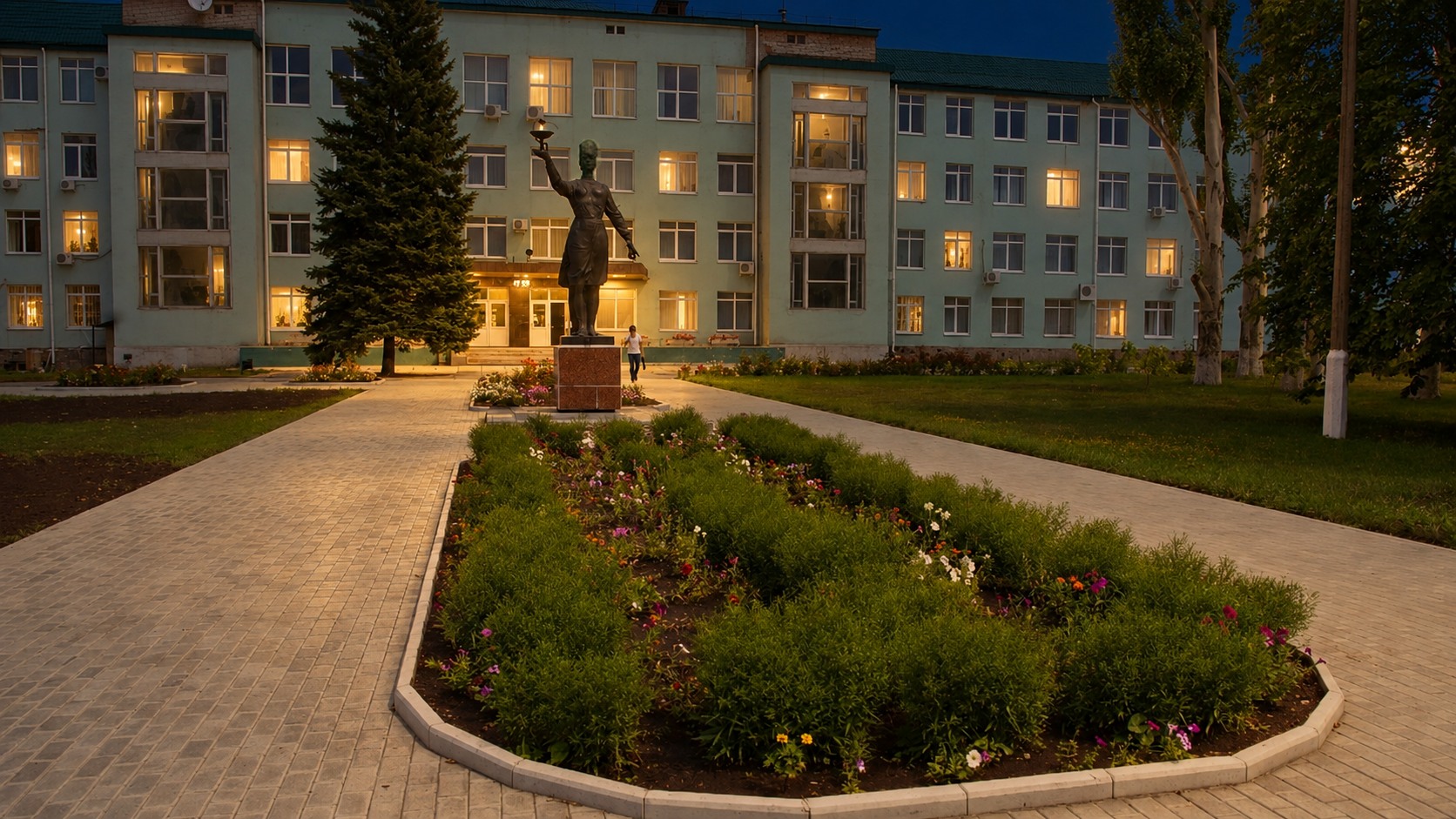
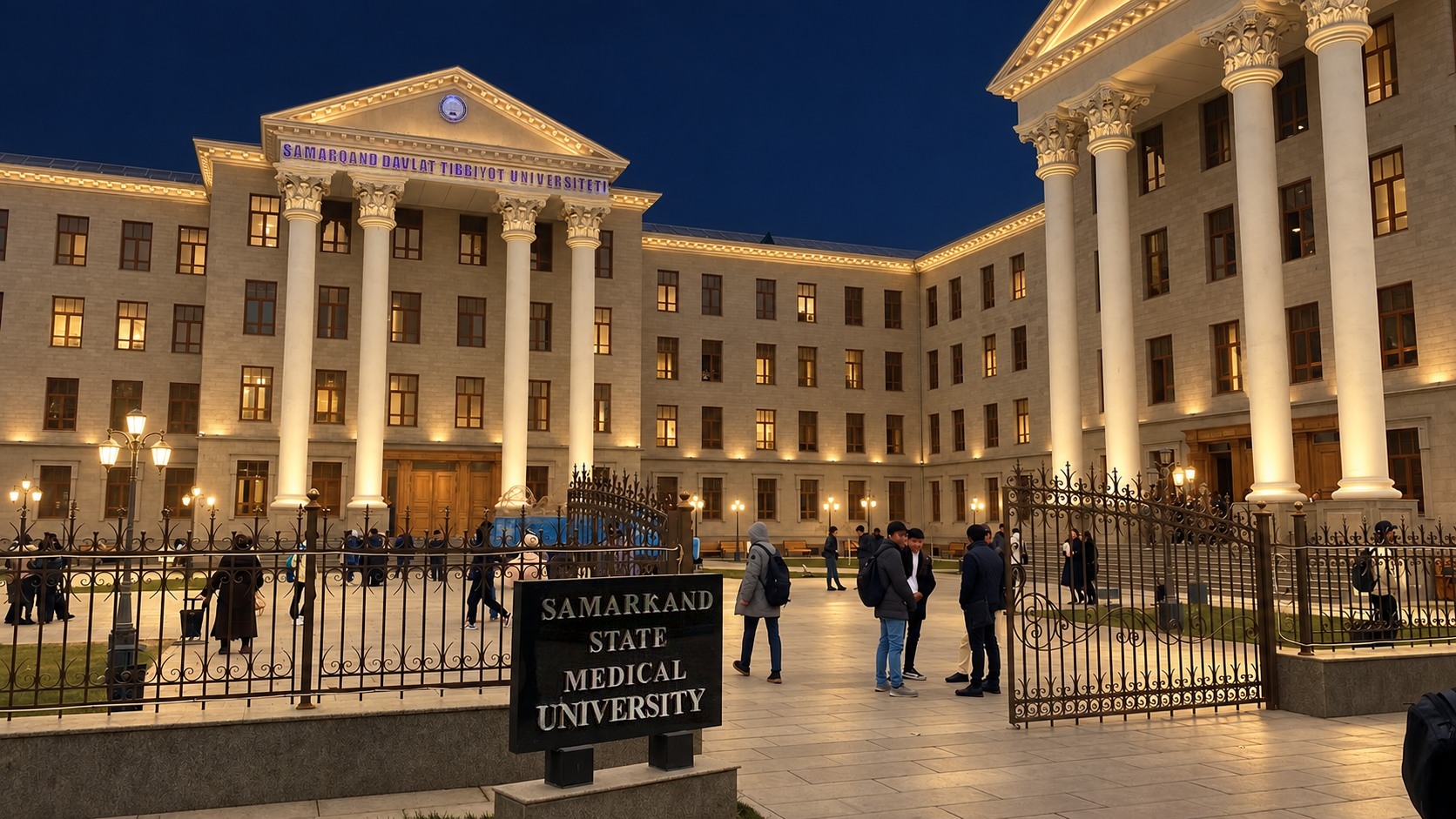
In a city whose name resonates deeply with the memory of science and cultural exchange, Samarkand State Medical University began its journey in 1930. It transitioned from an institute to a university in April 2022, but this transformation did not erase its medical origins; rather, it reintroduced them within a broader framework of education, research, and healthcare services. [1]
A History Read Through Specialization
These roots help us understand the university: an institution founded to teach medicine, which then expanded into adjacent health and scientific disciplines. Its structure encompasses medicine, pediatrics, and dentistry, alongside pharmacy, biotechnology, engineering, management, and international medical education. [1, 2]
This diversity is beneficial as it clarifies the different roles. Biomedical engineering focuses on the tools and systems that support diagnosis and treatment, healthcare management considers the organization of services, while the physician remains responsible for their clinical decisions within their area of expertise. Recognizing these distinctions early on enables students to work effectively in a team without confusing qualifications.
Learning Between the Lab and the Clinic
The institutional structure includes a multidisciplinary clinic, a pediatric surgery clinic, and simulation and training centers. Research activities also include infection and parasitology, rehabilitation, sports medicine, neurosurgery, and neurorehabilitation. [2]
The value of simulation lies in its ability to allow students to repeat skills and understand their steps before applying them to patients. Students can review their communication methods, examination procedures, and adherence to sterilization protocols under educational supervision. Simulation is not a replacement for clinical training, but it serves as a stepping stone that can make the transition to it more structured.
The research environment provides medical students with an entry point to scientific questions: Why do results vary? How do we distinguish correlation from causation? What makes a study inferential? These questions don't wait until the doctoral level; preparation for them begins with thorough critical reading and an understanding of the principles of statistics and scientific integrity.
Resources that make learning sustainable
The university provides e-learning platforms and digital educational resources, and offers services for international students, including accommodation and academic coordination. [1, 2] Their benefits are maximized when students use them regularly, reviewing course schedules, keeping references, and tracking assessment dates, rather than relying solely on peer-to-peer communication.
A balanced study week can be structured around three phases: understanding the material before the session, taking notes during the session, and then a short practical review afterward. This is a suggested study habit, not a mandatory description of the university curriculum. Its importance lies in transforming a multitude of resources into a tangible understanding that can be recalled and applied to real-world situations.
Specific Academic Collaborations, Not a General Promise
The program profile mentions educational collaborations with external institutions, including Belarusian State Medical University and Chuvash State University, within arrangements and programs described in their respective institutional histories. [1] This should not be interpreted as a transfer opportunity or a dual degree available to every student; the current program announcement, its requirements, and the awarding institution must be consulted.
The most useful question is not the number of agreements, but rather what the chosen pathway offers: a joint course, a scientific visit, an internship, or a degree with specific requirements. This specificity makes the collaboration a valuable asset that can be evaluated, rather than simply a name on a list.
Samarkand Outside of Study Hours
The university's main address is on Amir Timur Street in Samarkand. [2] Familiarizing oneself with the city allows for connecting academic life with its social and cultural environment, while also allocating time in a way that ensures regular lectures and breaks. The article on Uzbekistan in the UNIVEX library can be used to explore the city and its landmarks without confusing sightseeing with student accommodation arrangements.
The appeal of Samarkand Medical School lies in the convergence of specialized history with clinical practice, simulation, and research. This is further enhanced by reviewing the language of instruction at each stage, the nature of the training, and the validity of the degree in the country of practice. Once these elements are clear, the choice of university becomes based on a tangible educational experience, not solely on the city's reputation.
Sources and references
- Source 1 · www.sammu.uz
Original source title
الجامعة: التاريخ والمعلومات العامة - Source 2 · www.sammu.uz
Original source title
الموقع الرسمي للجامعة