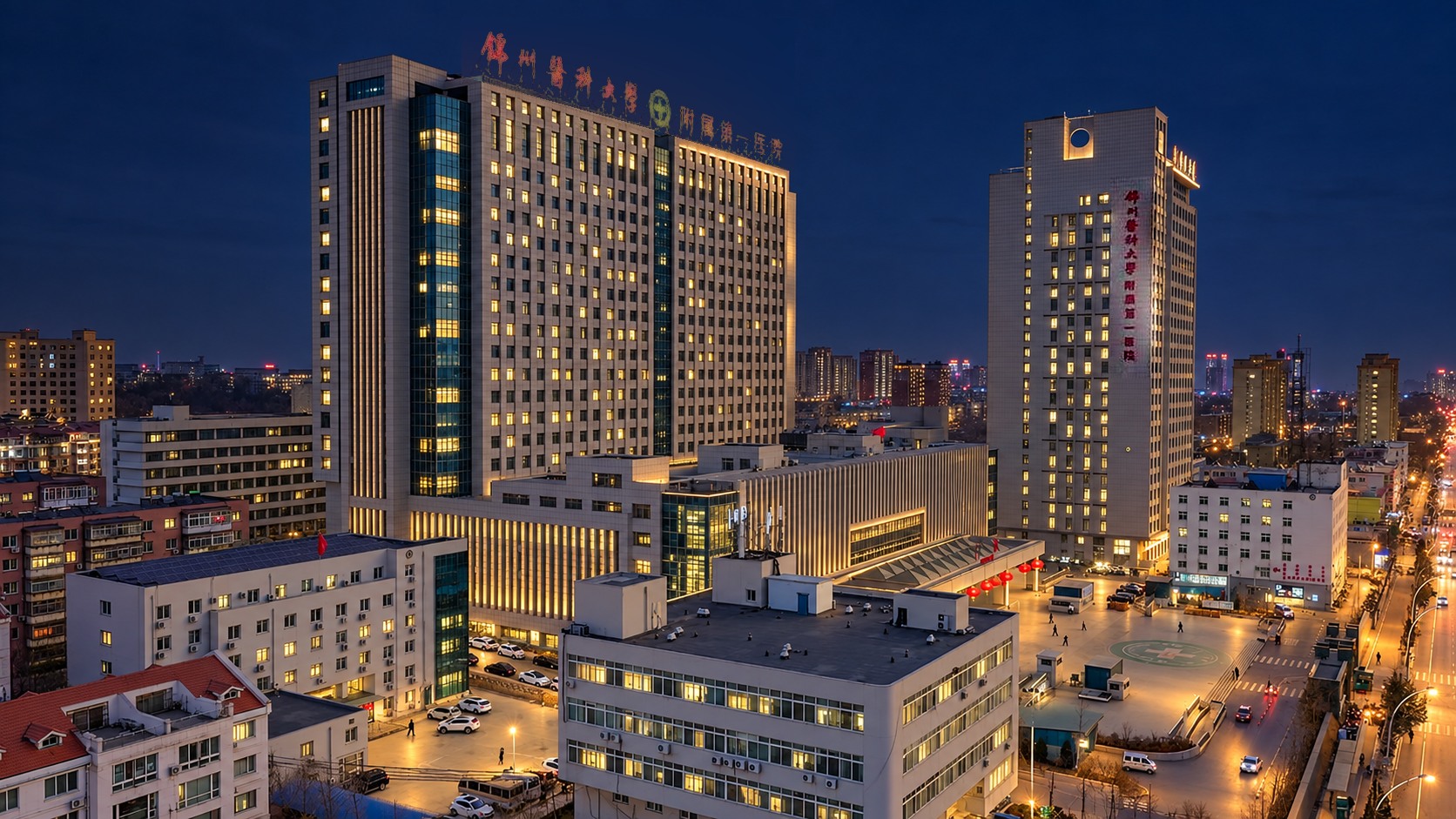
A medical university should be judged by its history, fields of study, and learning services, not by a short list of promises. In Jinzhou, Liaoning Province, the medical university is an institution that began with specialized health education and has since evolved into a broader structure integrating study, research, and clinical activities. [1]
From Health School to University
The roots trace back to a health school founded in 1946 in Taonan, which moved to Jinzhou in 1949. It became Jinzhou Medical College in 1958, adopted the name Liaoning Medical College in 2006, and finally Jinzhou Medical University in 2016. [1]
This sequence explains the appearance of different names in the documents and experiences of graduates from earlier periods. When comparing names, they should be linked to the correct year and entity, rather than considering each name as a separate institution or confusing it with other universities in the province.
Medicine at the Heart of a Broader Map
The profile places medicine at the center of its identity, alongside fields in science, engineering, agriculture, law, and philosophy. It describes platforms for experiential learning, clinical research and development, alongside undergraduate and postgraduate education. [1]
For the health student, this diversity helps them understand that healthcare is not just about anatomical or pharmacological knowledge. It also requires quantitative, ethical, and organizational skills, as well as the ability to collaborate with other disciplines. This understanding can be gradually developed through thoughtful reading, discussions, and projects offered by the program.
It is not assumed that every field listed in the structure is open to international students in every course. The value here is introductory; the admissions guide then outlines the available options, their languages, and requirements.
Resources that Make the Day Work
The English portal provides links to the library, online learning, accommodation, and international education, separating the relevant academic and administrative bodies for the incoming student. [2]
These services become most useful when students use them from the outset. Knowing how to access a resource or learning system saves time later, and identifying the right person to ask helps resolve issues instead of sharing unverified information among students. A small notebook containing essential procedures, deadlines, and official links can be created.
As for accommodation, it is chosen after understanding the study location, its rules, and the services provided. Options are compared based on daily comfort and available study time, not solely on image or marketing descriptions.
Transforming Knowledge into Skill
Medical studies typically begin with fundamental concepts that need to be connected: structure and function, then pathological change, and finally clinical interpretation. Students can develop their skills by creating concise concept maps, practicing spaced revision, and training themselves to explain the subject aloud without reading from a text.
In practical activities, accuracy, respect, and documentation are just as important as speed. Furthermore, dealing with patients or their data remains subject to supervision and confidentiality, and the presence of a hospital or research center does not constitute a blank check to participate in any activity.
Research as an Extension of Learning
The university describes research platforms and experimental centers within its structure. [1] Graduate students can use these platforms to search for a topic and supervisor, while undergraduate students benefit from learning how to read a paper, understand its questions, and utilize its tools. The goal is to understand how the researcher arrives at their conclusion, not simply to memorize the result.
Jinchu Medical presents a picture of a healthcare institution with a clear history, documented name changes, and services geared towards learning and international students. The comparison is completed by reviewing the current program, its language of instruction, training system, and fees, and then matching the degree to the requirements of the country where the student plans to work. In this way, the choice is based on a tangible study experience, not on general guarantees.
Sources and references
- Source 1 · www.jzmu.edu.cn
Original source title
التاريخ والتعريف المؤسسي - Source 2 · www.jzmu.edu.cn
Original source title
المكتبة والسكن والتعليم الدولي