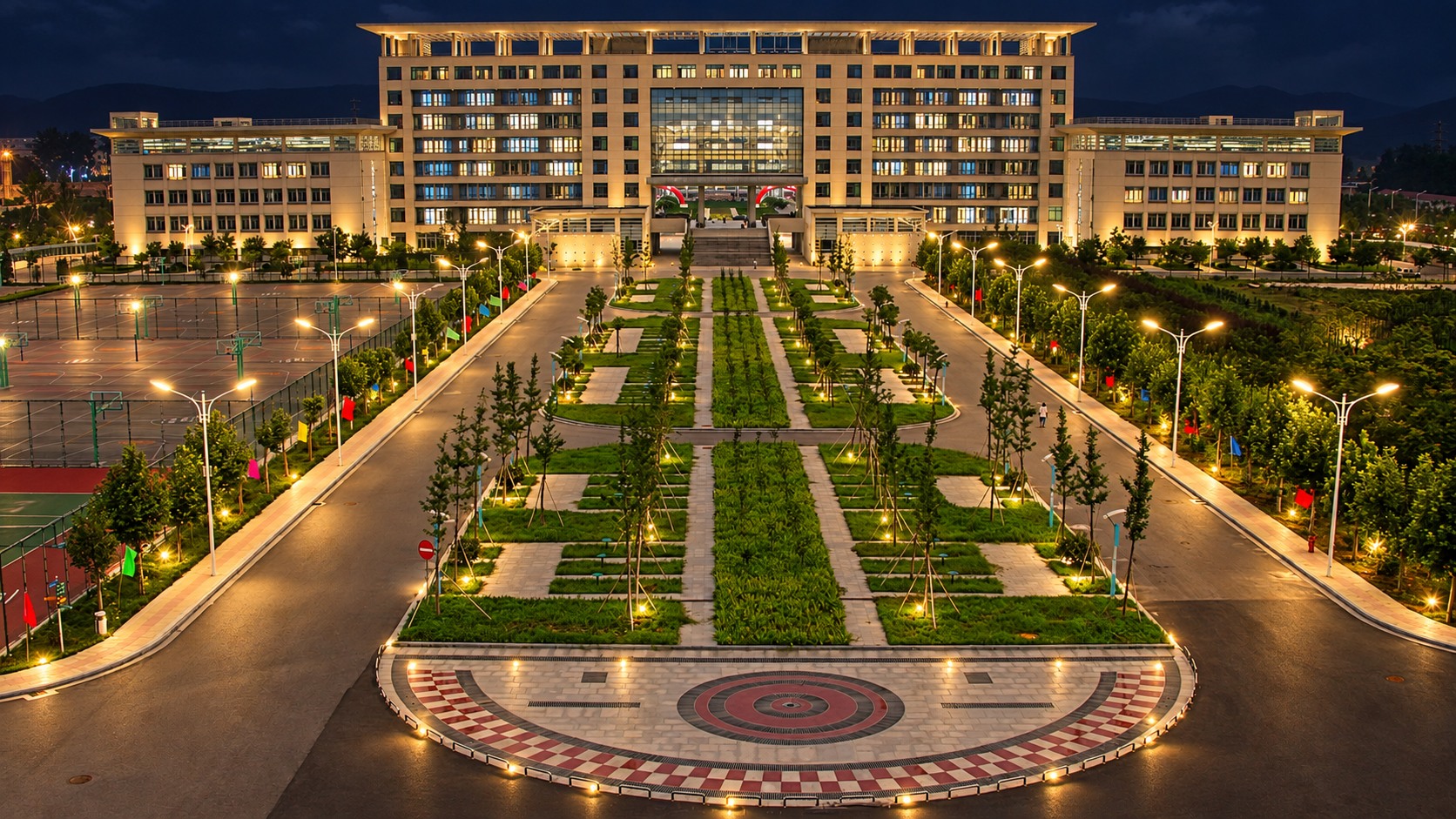
In Xuzhou, China, the medical university presents a distinct identity: multi-track health education with a strong focus on anesthesiology, neuroscience, and clinical research. This identity allows the reader to understand the university through its specific disciplines, rather than relying on a general description applicable to any medical school. [1]
Roots Preceding the Current Name
The institution's roots trace back to 1934, while the Xuzhou branch of Nanjing Medical College was established in 1958. The name Xuzhou Medical College was adopted in 1960, and then Xuzhou Medical University in 2016. The city and university are also sometimes referred to as "Shuzhou" in Arabic, but the English name, Xuzhou Medical University, remains the standard reference. [1]
This history illustrates the institution's transformation from a medical college to a university with broader standards and programs. Students should read this history as background to understand its current structure, not as a substitute for reviewing their chosen course of study.
Why Does Anesthesiology Prominent in Its Identity?
The university describes anesthesiology as one of its core areas of specialization and offers research platforms in anesthesiology and brain sciences. Its structure also encompasses basic and clinical medicine, nursing, pharmacy, public health, dentistry, and biomedical engineering. [1]
Anesthesiology is a prime example of the integration of basic science, clinical observation, and teamwork. It is not merely a pre-operative procedure; it is a field that requires an understanding of biological functions, medication, and structured communication. Medical students benefit from this model by realizing that sound decision-making is based on interconnected knowledge, not on memorizing isolated information.
Enrolling in general medicine does not automatically grant specialization in anesthesiology. Subsequent professional specialization has its own pathways and requirements, while the value of this specialization lies in having a clear academic focus that students can explore early on.
Labs with Specific Questions
The website links to labs in immunology, metabolism, biotherapy, and organ transplantation, a platform for sharing scientific equipment, and a clinical research institute. It also features library services, international education, and academic collaboration opportunities. [2]
The diversity of these platforms helps visualize the journey of a medical inquiry: it begins with observation, then requires experimentation, measurement, and interpretation, and may later lead to clinical application after independent stages of validation. Students must always distinguish between ongoing research and proven treatments, and between the existence of advanced equipment and the ability to use it within their program.
A good practical start is learning to take notes, read scientific diagrams, and understand study design. These skills transform a lab visit or a research paper discussion into a meaningful experience, rather than a mere observation of names and technologies whose function remains unclear.
Studying and Life Outside the Classroom
The university is affiliated with Xuzhou in Jiangsu Province. [1] Students can establish a stable experience by familiarizing themselves with the location of the college, accommodation, and academic services, and then allocating time for language, movement, and communication with colleagues. Regular routines are particularly valuable in health programs, which require cumulative study that cannot be adequately addressed through late-night review alone.
It is beneficial for students to maintain a personal portfolio that includes their projects and study reflections, while respecting patient privacy and refraining from collecting clinical data or images without permission. This ensures that the experience is documented and accounted for, allowing students to review their progress from one stage to the next.
A University Defined by Its Specialization
Shuzhou Medical University is a worthwhile comparison for those seeking a distinguished healthcare institution specializing in anesthesia, biomedical research, and clinical practice. The picture is further enhanced by examining the program available to international students, its language of instruction, training locations, and the requirements for practicing in the target country.
The most compelling aspect, however, after reviewing the details, is the clarity of its identity: a university where students can experience medicine as an empirical science, a clinical skill, and a humanitarian responsibility.
Sources and references
- Source 1 · www.xzhmu.edu.cn
Original source title
النبذة المؤسسية المحدثة في سبتمبر 2026 - Source 2 · www.xzhmu.edu.cn
Original source title
المختبرات والخدمات الأكاديمية