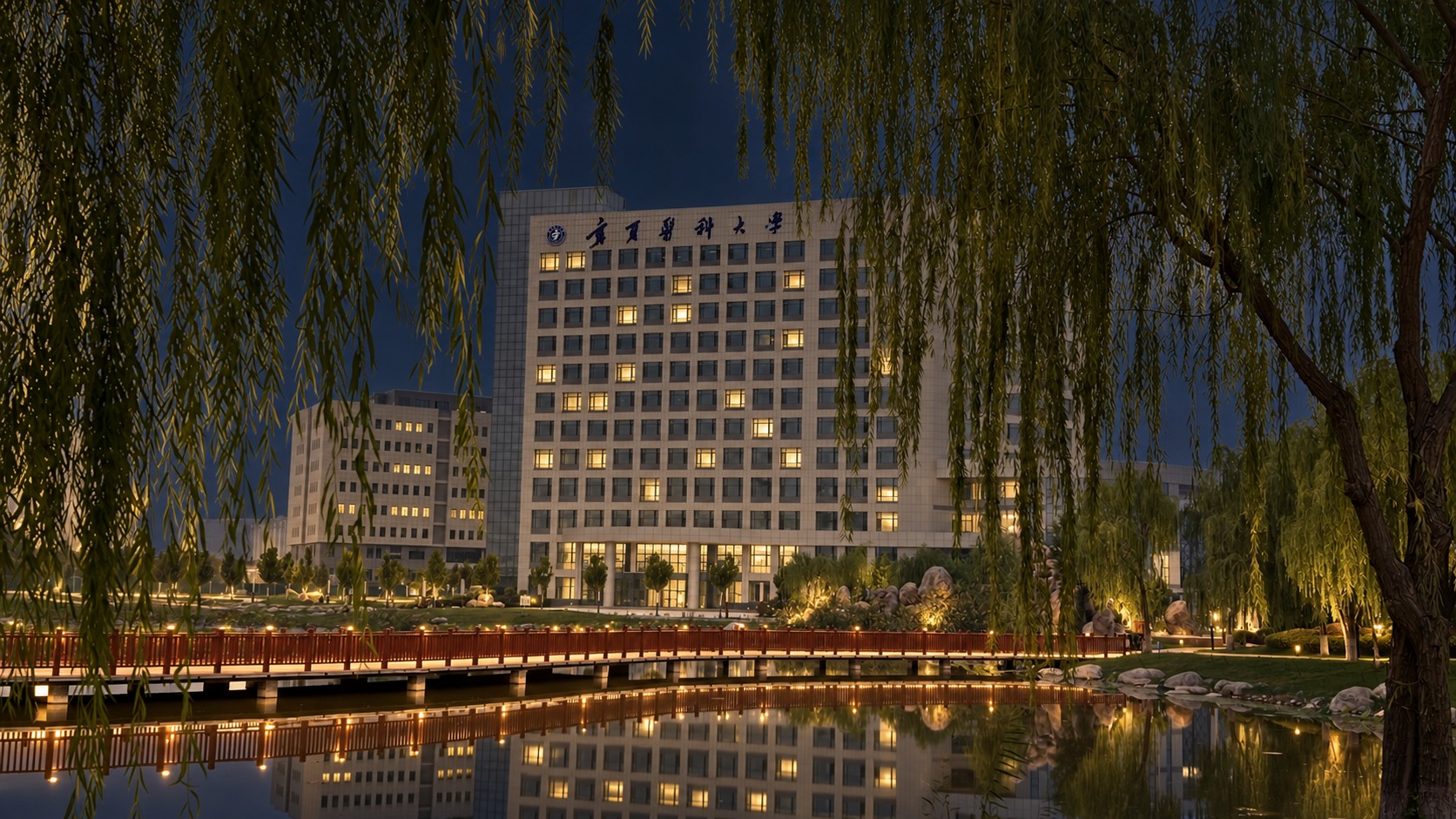
Universities affiliated with their regions add an important dimension to the study of medicine: understanding the human being within their environment, culture, and healthcare services. In Yinchuan, the capital of Ningxia, Ningxia Medical University exemplifies an institution that integrates medical education, research, and local healthcare traditions into a distinct identity. [1]
A Journey that Began with a Medical College
Ningxia Medical College was founded in 1958, then merged with Ningxia University in 1962 and was restructured in 1972. Health and nursing institutions joined in 2002, before the name Ningxia Medical University was officially adopted in 2008. The university's profile also notes that it gained the authority to award doctoral degrees in 2013. [1]
This sequence helps to understand that the institution has evolved through the accumulation of educational and healthcare expertise, not simply through a name change. For students, the next step is to understand how this structure is reflected in their chosen program, its theoretical and practical phases, and the entity responsible for their training.
University, Hospital, and Research
The profile describes the Yanhu and Shuang'i campuses, a general hospital integrating treatment, education, research, and training, along with research platforms in fields such as neuroscience and gastroenterology. It also mentions a cultural museum and institutions dedicated to the study of the Hui community's medical heritage. [1]
These elements give the university two complementary aspects to its identity: contemporary medical knowledge and an interest in the history of healthcare practice within its surrounding environment. It is important here to distinguish between cultural and historical value and the validation of a particular treatment's effectiveness; recognizing heritage does not negate the need for scientific evidence and clinical controls.
What Does a Student Learn from the Local Context?
Studying medicine in a different cultural environment helps develop listening skills. A patient presents not only symptoms but also language, expectations, customs, and personal experience. A good physician or nurse needs to understand these elements without generalizing to an entire community.
A student can begin by learning everyday terminology and respecting local communication styles, then develop the ability to ask clear questions and re-explain information in understandable language. These are general human skills that complement academic knowledge, and the practice of any clinical activity remains subject to appropriate supervision and authorization.
From Memorization to Building a Knowledge Network
A strong start in health-related disciplines involves connecting the basic sciences. Studying an organ is not complete by describing its structure, but by understanding its function, relationships, and how it changes in disease. Short charts, periodic reviews, and practice questions can be used to gradually build this network.
Comparing disciplines is also helpful in making choices. Those who enjoy daily interaction and follow-up may find nursing appealing, those who enjoy analyzing clinical problems may be drawn to medicine, and those who prefer research can explore subsequent scientific paths. The availability of each program for international students should be reviewed in the current announcement, not in this general description.
Life in Yinchuan
The university's location in Yinchuan offers students an experience outside of China's more frequented coastal cities. [1] They can establish their stability by familiarizing themselves with the campus location, choosing accommodation based on commute times, and identifying study areas and essential services. Regular daily routines help allow time for cultural exploration without disrupting their studies.
The article doesn't need a fixed estimate of the cost of living to be useful; it's better for the student to compare specific items: housing, food, transportation, insurance, and course materials, and then obtain up-to-date prices that suit their location and lifestyle.
An Identity Worth Understanding
Ningxia Medical University offers a unique case for comparison: a healthcare institution in Yinchuan that combines education, research, and local cultural context. The picture is completed by checking the language of instruction, the training location, admission requirements, and the required accreditation in the country of practice. This ensures the choice remains based on balanced and specific knowledge, without assuming that the university's prestige or the presence of a hospital guarantees a certain professional outcome.
Sources and references
- Source 1 · www.nxmu.edu.cn
Original source title
النبذة الرسمية والتاريخ؛ الصفحة غير مؤرخة